Source Hobbing Internal Gear Rack and Pinion for Industry
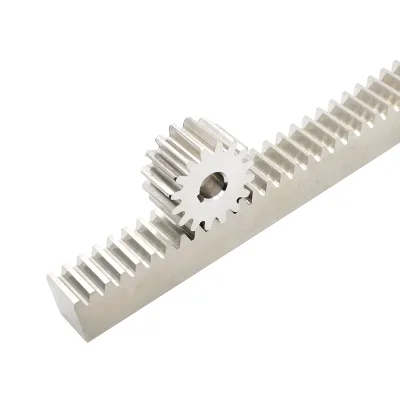
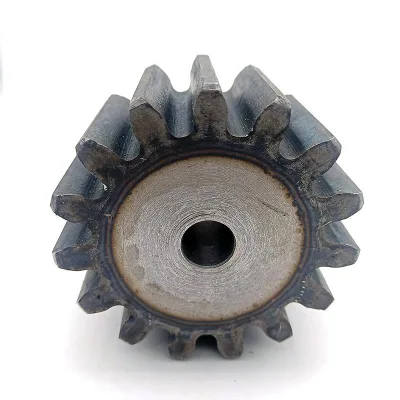
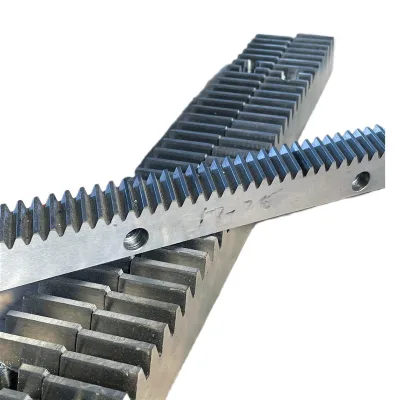
Find 30 listings for hobbing internal gear rack and pinion components suitable for agricultural machinery, motors, and production greenhouses. Compare specifications including stainless steel and cast steel materials, DIN precision grades, and OEM customization options to identify the right fit for your mechanical systems.
Key considerations
Products List


Comprehensive Sourcing Guide
Hobbing Internal Gear Rack and Pinion Sourcing Guide
Procuring hobbing internal gear racks and pinions requires a precise understanding of manufacturing capabilities and application-specific constraints. These components are critical for transmitting motion and torque in complex mechanical systems, where the internal gear configuration allows for compact design and high torque density. Buyers must recognize that the hobbing process is essential for achieving the necessary tooth profile accuracy and surface finish, particularly for high-volume production runs. The selection of materials, such as stainless steel or cast steel, directly influences the component's durability and resistance to wear under varying operational loads.
The sourcing landscape for these specialized mechanical parts is diverse, with suppliers offering a wide range of customization options to meet specific engineering requirements. It is vital to evaluate whether the supplier can accommodate custom drawings or samples, as off-the-shelf solutions may not fit unique assembly constraints. Additionally, the hardness of the tooth surface, whether soft or hardened, plays a significant role in the gear's performance and lifespan. Buyers should prioritize suppliers who provide detailed technical documentation and quality assurance protocols to ensure that the final product meets the rigorous demands of industrial and agricultural machinery applications.
Product Scope and Observed Listing Signals
The observed market signals indicate a broad spectrum of product configurations, ranging from small to large sizes and various modulus values such as M1 through M8. Listings frequently highlight customization services, including OEM and ODM support, which suggests that many manufacturers are equipped to produce parts based on specific client drawings or samples. The presence of attributes like "forced manipulation" and "stepped changes" points to specialized gear designs that may be used in applications requiring precise positional control or variable speed transmission. Buyers should carefully review these signals to ensure that the supplier's capabilities align with their specific technical needs, particularly regarding toothed portion shapes like bevel wheels or spur gears.
Packing and origin details provide additional context for logistics and quality expectations. Products are often shipped in plywood cases, wooden boxes, or export packages, indicating a focus on protecting precision components during transit. The origin is frequently listed as China, with specific regions like Zhejiang noted as manufacturing hubs, which are known for their robust machinery and hardware industries. While some listings mention standards like CE, buyers must verify that these certifications are valid and applicable to their specific market requirements. Understanding these listing signals helps in filtering suppliers who can deliver the required quality and compliance standards for international procurement.
Technical Specifications to Verify
Verifying technical specifications is paramount to ensuring the compatibility and performance of internal gear racks and pinions. Key attributes to confirm include the precision grade, which may align with standards like DIN5 through DIN10, and the modulus, which determines the size of the gear teeth. Buyers should also inquire about the tooth surface roughness, with observed ranges starting at ≥0.4, as this affects friction and wear characteristics. The heat treatment process, such as quenching or carburizing, is crucial for enhancing the hardness and durability of the gear teeth, particularly for applications involving high loads or frequent cycling.
Tolerance levels are another critical specification that must be strictly verified, with some suppliers claiming tolerances as tight as 1 micrometer. This level of precision is essential for applications requiring minimal backlash and high positional accuracy. Additionally, the gear teeth number and type, whether circular or pinion, must match the design requirements of the final assembly. Buyers should request detailed engineering drawings and specifications from suppliers to ensure that all dimensional and geometric parameters are met. Confirming these technical details early in the sourcing process helps prevent costly rework and ensures seamless integration into the end product.
Compliance and Safety Documentation
Compliance with international standards and safety regulations is a non-negotiable aspect of sourcing mechanical components. Buyers must verify that suppliers hold relevant certifications, such as CE, which indicates conformity with health, safety, and environmental protection standards for products sold within the European Economic Area. While some background information mentions ISO 9001:2015, buyers should explicitly request proof of certification and ensure that the quality management system is actively maintained and audited. This documentation provides assurance that the supplier follows consistent processes for manufacturing and quality control, reducing the risk of defects and non-conformities.
Safety documentation also includes material safety data sheets and compliance with environmental regulations, particularly if the gears are used in sensitive applications. Buyers should inquire about the testing procedures employed by the supplier, such as ultrasonic testing (UT) or magnetic particle testing (MT), to detect internal or surface flaws. These tests are critical for ensuring the structural integrity of the gears, especially when they are subjected to high stress or cyclic loading. By demanding comprehensive compliance and safety documentation, buyers can mitigate risks associated with product failure and ensure that the components meet the legal and regulatory requirements of their target markets.
Cost Drivers and Commercial Terms
Several factors influence the cost of hobbing internal gear racks and pinions, including material selection, complexity of the design, and order volume. Materials like stainless steel or cast steel have different price points and processing requirements, which directly impact the final cost. The modulus and precision grade also play significant roles, as higher precision and smaller modules require more intricate machining and tighter tolerances, leading to increased production costs. Buyers should consider the trade-off between cost and performance, selecting materials and specifications that meet their operational needs without unnecessary over-engineering.
Commercial terms, such as minimum order quantity (MOQ) and payment terms, are also critical considerations. Observed MOQs range from 1 piece to 100 pieces, offering flexibility for both prototype development and bulk production. Buyers should negotiate favorable payment terms and clarify any additional costs for customization, packaging, or shipping. It is advisable to request detailed quotations that break down costs by material, labor, and overhead, allowing for a transparent comparison between suppliers. Understanding these cost drivers helps buyers make informed decisions and optimize their procurement budget while maintaining quality standards.
Supplier Qualification and Quality Control
Evaluating supplier qualification and quality control processes is essential for ensuring consistent product quality and reliability. Buyers should assess the supplier's manufacturing capabilities, including their equipment for hobbing, cutting, and heat treatment, as well as their experience in producing internal gears and pinions. Requesting samples and conducting thorough inspections can help verify the supplier's ability to meet specified tolerances and surface finish requirements. Additionally, buyers should inquire about the supplier's quality control protocols, such as 100% inspection rates and the use of advanced testing methods to detect defects.
Building a long-term relationship with a qualified supplier can lead to better pricing, priority production, and improved technical support. Buyers should look for suppliers who offer design support, such as engineering drawing review and optimization, to enhance the performance and manufacturability of the components. Clear communication channels and responsive customer service are also indicators of a reliable supplier. By prioritizing suppliers with robust quality control systems and a commitment to continuous improvement, buyers can minimize risks and ensure the successful integration of hobbing internal gear racks and pinions into their products.
Long-Term Procurement Checks
Long-term procurement success depends on regular performance reviews and continuous improvement initiatives. Buyers should establish key performance indicators (KPIs) to monitor supplier performance, including on-time delivery, product quality, and responsiveness to issues. Regular audits and site visits can help verify that the supplier maintains their quality management systems and adheres to agreed-upon standards. Additionally, buyers should stay informed about industry trends and technological advancements that may impact the sourcing of mechanical components, allowing for proactive adjustments to procurement strategies.
Collaborating with suppliers on product development and innovation can lead to cost savings and enhanced product performance. Buyers should encourage suppliers to propose improvements in materials, processes, or designs that can benefit both parties. Maintaining open communication and fostering a partnership mindset can lead to more resilient supply chains and better outcomes in the long run. By implementing systematic long-term procurement checks, buyers can ensure that their sourcing activities remain aligned with business goals and market demands, securing a competitive advantage in their respective industries.
FAQs
Can I get custom hobbing internal gear rack and pinion per drawing?
Yes, customization is available as per the clients drawing. The supplier supports OEM and ODM services, allowing you to provide specific samples or engineering drawings for review and optimization before production begins.
What materials are used for hobbing internal gear rack and pinion?
Materials include stainless steel and cast steel options. These products are designed for industrial applications and agricultural machinery, ensuring durability and performance across various production environments and mechanical systems.
Which hardness levels are available for hobbing internal gear rack and pinion?
Both soft tooth surface and hardened tooth surface options exist. Hardened versions undergo quenching or carburizing heat treatment to enhance durability, while soft surfaces suit different operational requirements for specific industrial machinery needs.
How is the hobbing internal gear rack and pinion packed for export?
Packaging includes plywood cases, export packages, and wooden boxes. These methods ensure safe transport of the small or large gear components, protecting them during international shipping from the manufacturing origin in China.
What is the minimum order quantity for hobbing internal gear rack and pinion?
The minimum order quantity starts at one piece. This low MOQ allows buyers to test product quality or order small batches for specific machinery projects without committing to large initial inventory volumes.
Can the hobbing internal gear rack and pinion replace mainstream brand parts?
Yes, the product can replace or match parts of mainstream market brands. It offers compatibility with existing systems, supporting engineering drawing reviews to ensure precise fit and function for your specific machinery applications.